
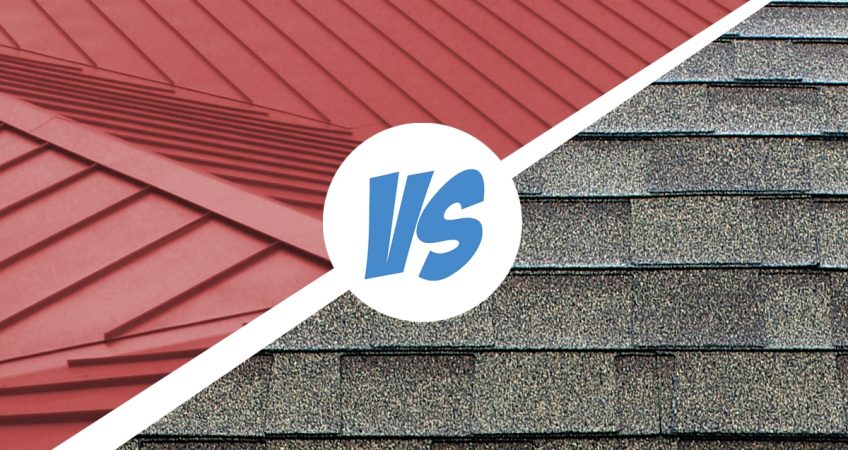
Most roofing decisions come down to upfront cost. A metal roof costs more to install than asphalt shingles, typically two to three times more depending on the profile and complexity of your home. That number stops a lot of homeowners from going further. But it is the wrong number to focus on, and here is why.
The Real Cost Comparison Over 50 Years
An asphalt shingle roof in Alberta typically lasts 15 to 25 years before it needs full replacement. In Red Deer’s climate, with freeze-thaw cycling, hail seasons and temperature swings of 60 degrees or more between summer and winter, shingles take a beating. Fifteen years is realistic for many homes, especially on low-pitch sections or north-facing slopes that hold snow.
A metal roof installed correctly lasts 50 years or more. Many standing seam roofs installed in the 1970s and 80s are still performing without issues today.
Run the numbers on a mid-sized Red Deer home:
- Asphalt at $12,000 installed, replaced twice in 50 years, equals $36,000 in today’s dollars, not accounting for inflation in labour and materials
- Metal at $28,000 installed, one installation for the same 50-year period
That is an $8,000 saving over the lifespan of the home, before factoring in the repair calls, emergency patches and insurance claims that accumulate with aging asphalt roofs.
What Alberta’s Climate Actually Does to Asphalt Shingles
This is the part that rarely gets explained clearly. The failure mode for asphalt shingles in Alberta is not usually a single storm event. It is cumulative thermal cycling.
Every time the temperature drops below freezing and rises above it, your roof expands and contracts. In Red Deer, that cycle can happen dozens of times in a single spring month. Over years, the repeated movement breaks down the adhesive strips that seal shingle tabs, allows granule loss, and causes the micro-cracking that eventually lets water underneath.
Metal roofing panels are designed to move. Standing seam systems use concealed clips that allow the panel to float as it expands and contracts, without stressing the fasteners or the seams. This is why metal handles thermal cycling so much better than a rigid nailed shingle system.
Hail, the Part That Actually Matters Most in Central Alberta
Red Deer sits in one of Canada’s most active hail corridors. The storms that roll through Central Alberta in late June and July regularly produce hail large enough to crater asphalt shingles and trigger insurance claims.
Here is what most homeowners do not know: after a major hail event, your insurer pays to replace your asphalt roof. You pay your deductible. Your premium goes up at renewal. Three years later, another storm comes through and the cycle repeats.
Metal roofing changes this equation in two ways. First, most metal profiles are significantly more impact resistant than asphalt. A Class 4 impact rating is standard for quality metal panels and is the highest rating available under UL 2218 testing. Second, many insurance companies offer premium discounts of 20 to 30 percent for Class 4 rated roofing materials. Over 20 years, those savings compound into a meaningful number.
Before purchasing a metal roof, call your insurer and ask specifically about Class 4 discounts. Get the number in writing and factor it into your total cost comparison.
Energy Efficiency, What Is Realistic and What Is Overstated
Metal roofing is often marketed as energy-efficient, and there is truth to it, with an important caveat.
A bare metal panel in dark colours can absorb significant heat. The energy efficiency benefit comes primarily from two things: reflective paint systems on lighter-coloured metal panels, and the air gap that exists between a standing seam panel and the roof deck beneath it. That air gap acts as a thermal break.
In practice, Red Deer homeowners replacing an older dark asphalt roof with a lighter metal roof and a quality underlayment system often report noticeable reductions in attic heat buildup in summer. Whether that translates to lower energy bills depends heavily on your insulation levels. A well-insulated attic matters more than the roofing material.
The Canada Greener Homes Grant has offered funding for qualifying energy efficiency upgrades including roofing in some program years. The program details change frequently so check nrcan.gc.ca for current eligibility before planning around it.
What to Ask Before You Buy a Metal Roof
Not all metal roofing is equal, and a lot of the long-term value depends on the installation quality as much as the material itself.
Ask about panel origin. Panels rolled in-house at the installer’s own shop are cut to the exact length your roof requires, which eliminates end laps, the most common source of leaks on older metal roofs. Panels ordered from an external supplier and cut on site are more likely to require lapped joints.
Ask about the concealed clip system. Standing seam panels should float on clips, not be through-fastened. Any screw that penetrates the face of the panel is a potential leak point as the rubber washer degrades over 15 to 20 years.
Ask about paint system warranty. Quality steel roofing panels carry a Kynar 500 or equivalent PVDF coating with a 30 to 40 year warranty against fade and chalk. Cheap panels use polyester paint that fades significantly within 10 years.
Ask about flashings. The roof itself rarely fails first. The flashings around chimneys, skylights, vents and valleys do. A quality installation uses custom-bent flashings produced to fit your specific roof geometry, not stock components adapted to fit.
At RemStar Roofing we produce our panels and flashings in-house at our Red Deer fabrication shop, which means everything is cut to length for your specific project with no end laps and no stock components. If you are weighing the decision between replacing with asphalt again or making the move to metal, we are happy to walk through the actual numbers for your home. Contact us for a free assessment.